Showing posts with label US. Show all posts

13 February 2015

Thorium as an Alternative Source of Cheap & Plentiful Energy


India's Prototype Fast Thorium Breeder Reactor (PFTBR) - the 200-tonne safety vessel being lowered into the reactor vault at the Madras Atomic Power Station (MAPS) located at Kalpakkam about 80 kilometres (50 mi) south of Chennai, India 

INTRODUCTION


“Safe enough for our back yard”

Electricity is a predominant input for the economic development of any country. In spite of the impressive strides in increasing overall installed capacity in the India, the country is still facing power shortages. Options available for commercial electricity generation are hydro, thermal, nuclear and renewable sources. In the energy planning of the country, a judicious mix of hydro, thermal, nuclear and renewable is an important aspect. Diversified energy resource-base is essential to meet electricity requirements and to ensure long-term energy security. With the limited resources of coal and oil available in India and the growing global concerns of greenhouse gases generated by fossil fuel fired stations, in the medium and long-term perspective nuclear power is designated to play a vital role. For a trillion dollar plus economy, like India, increase in the nuclear generation capacity is rational and an inevitable approach as it is environmentally benign, commercially viable and ensures the energy security of the country.

Current Scenario

Post Obama’s visit to India and the clearing of the nuclear deal between India and the US, a great amount of buzz has been generated on this issue. However, the focus has thus far been on using Uranium as a source of nuclear fuel and India getting access to this source of fuel besides the nuclear reactors.


         A Sample of Thorium
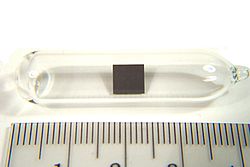
A couple of years back when the nuclear deal was first proposed during the UPA government’s stint in power, scientists in India vehemently opposed placing its fast breeder reactor technology under the preview of international nuclear watch dogs and pressed for focusing on Thorium based Fast Breeder Reactor technology for the future.

However, the previous UPA government followed an unwritten policy of severely downsizing both the Fast Breeder Reactor (FBT) as well as the thorium-based technology program, thereby making India dependent on foreign countries for advanced nuclear technology, this is claimed by many key scientists on condition of anonymity. 

Until 2005, Indian was at the forefront of thorium based research. It is also by far the most committed nation as far as the use of thorium fuel is concerned, and no other country has done as much neutron physics work on thorium as India. The country published about twice the number of papers on thorium as its nearest competitors during each of the years from 2002 to 2006.

Bhabha Atomic Research Centre (BARC) had the highest number of publications in the thorium area, across all research institutions in the world during the period 1982-2004. During this same period, India ranks an overall second behind the United States in the research output on Thorium. Analysis shows that majority of the authors involved in thorium research publications appear to be from India.

       Illustration of a Molten salt Reactor
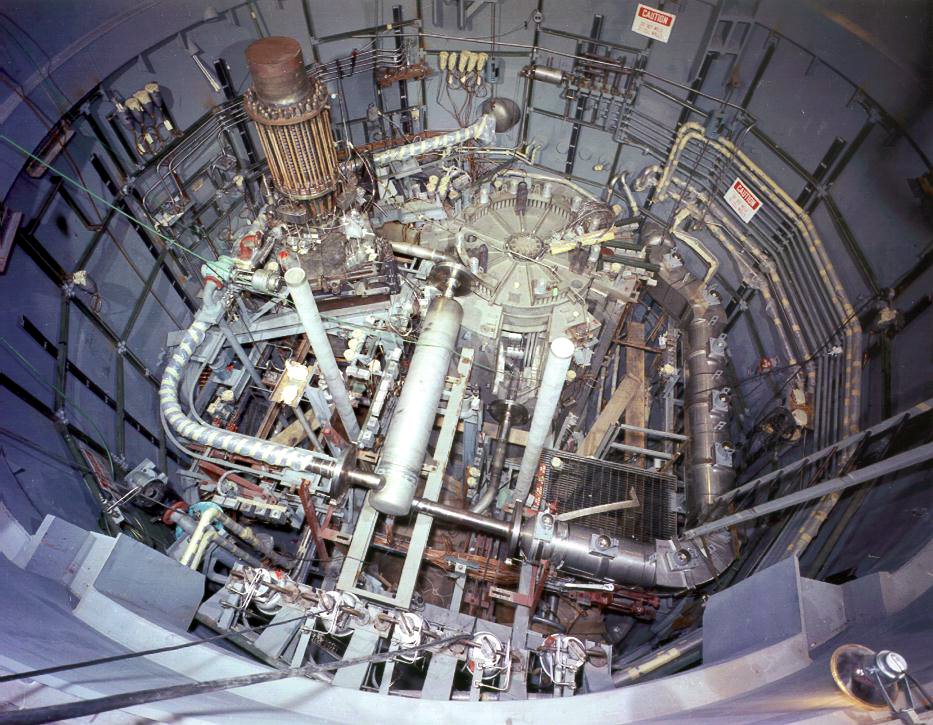
Research and development of thorium-based nuclear reactors, primarily the Liquid fluoride thorium reactor, (LFTR), MSR design, has been or is now being done in the U.S., U.K.,Germany, Brazil, India, China, France, the Czech Republic, Japan, Russia, Canada, Israel and the Netherlands.

According to Siegfried Hecker, a former director (1986–1997) of the Los Alamos National Laboratory in the U.S., "India has the most technically ambitious and innovative nuclear energy program in the world. The extent and functionality of its nuclear experimental facilities is matched only by Russia and is far ahead of the United States".

Back to circa 2015, India is back to counting on foreign suppliers for expensive Uranium fuel and reactors. And this is certainly the wrong direction taken by the policy makers on account of these following vital facts:

Thorium offers a form of energy that is stable, abundant, inexpensive, powerful, safe, continuous, domestically-sourced, non-polluting during both extraction and consumption, transportable, and for which India has at least a thousand-year reserve.

India's Research on Prototype Fast Thorium Breeder Reactor (PFTBR)

At present, there are no internal fertile blankets or fissile breeding zones in power reactors operating in the world. Thorium-based fuels and fuel cycles have been used in the past and are being developed in a few countries but are yet to be commercialized. However, BARC's Prototype Fast Thorium Breeder Reactor (PFTBR) is claimed to be the first design that truly exploits the concept of "breeding" in a reactor that uses thorium. The handful of Fast Breeder Reactors (FBRs) in the world today - including the one India is building in Kalpakkam near Chennai, use plutonium as fuel. These breeders have to wait until enough plutonium to be accumulated through reprocessing of spent fuel discharged by thermal power reactors that run on Uranium. In February 2014, BARC presented its latest design for a "next-generation nuclear reactor" that will burn thorium as its fuel. The target date to commission the system is envisioned for 2016 and it would be a completely automated design which means it would not require any operator to run the reactor for more than two months. The commissioning of PFTBR would make India the most advanced country in thorium research. The concept has won praise from nuclear experts elsewhere. According to former BARC Director P.K. Iyengar, this new design is one way of utilizing thorium and circumventing the delays in building plutonium for India's FBRs. (Text based on reports from Times of India, Circa 2007)

Switching from Uranium to Thorium

India has chalked out a three-stage program to reduce its reliance on imported uranium seeks to make more substantial use of thorium, of which India holds 25% of the world’s total reserves. Although Th-232 is not fissile, it will absorb slow neutrons to produce fissile U-233 when placed in a reactor. (See the sidebar "Now you’re cooking with Thorium" in "Developing the next generation of reactors," POWER, April 2008.) A thorium-powered reactor would be based on a closed fuel cycle.

The first stage consists of setting up pressurized heavy water reactors (PHWRs). Already 17 PHWRs with an installed capacity of 4,000 MW are in operation, and five reactors with an installed capacity of 2,660 MW are under construction. "The choice of PHWRs in the first stage is driven by the fact that in PHWRs, on account of the use of heavy water as moderator and on-power refueling, more neutrons are available to convert U-238 to Pu than in the case of Light Water Reactors (LWRs)," Anil Kakodkar, chair of India’s Atomic Energy Commission, said at a public lecture in Bangalore last year.

The second phase will start with the deployment of domestically designed fast breeder reactors (FBRs) fueled with mixed oxide, and then — when all "necessary technologies" have been developed and demonstrated — metallic fuel – based FBRs, Kakodkar said. These are expected to convert uranium – 238 into plutonium, increasing power generation to 300 GW for about 70 years.

The third stage will involve the gradual transition to thorium-based systems, likely through an advanced heavy water reactor (AHWR) being developed at the Mumbai-based Bhabha Atomic Research Center (BARC). The uranium-233 required for third-stage breeder reactors will be obtained by the irradiation of thorium in PHWRs and FBRs. "Studies indicate that once the FBR capacity reaches about 200 GW, thorium-based fuel can be introduced progressively in the FBRs to initiate the third stage, where U-233 bred in these reactors is to be used in the thorium-based reactors," Kakodkar said.

Construction of a 500-MWe prototype FBR — the first in India — is already in full swing at Kalpakkam, Tamil Nadu (Figure 10). All research and developmental work by the Indira Gandhi Centre for Atomic Research (IGCAR) has been completed on the R35 billion ($680 million) reactor. The project, a joint venture between Bharatiya Nabhikiya Vidyut Nigam, the Nuclear Power Corp. of India, and the IGCAR (which are all federal enterprises) — is expected to begin generating power sometime in 2010.

Types of thorium-based reactors

There are seven types of reactors that can be designed to use thorium as a nuclear fuel. The first five of these have all entered into operational service at some point. The last two are still conceptual, although currently in development by many countries:

  • Heavy water reactors (PHWRs) 
  • High-temperature gas-cooled reactors (HTRs) 
  • Boiling (light) water reactors (BWRs) 
  • Pressurized (Light) water reactors (PWRs) 
  • Fast neutron reactors (FNRs) 
  • Molten salt reactors (MSRs, LFTRs) 
Salient Features of Thorium Fuel and its Reactors

Thorium is Stable (fertile, not fissile)

  • Half life of 1.39x10¹⁰ years 
  • Stable in natural state 
  • Can be handled with care in solid form. Shavings or powder can self-combust in air. 
  • For energy purposes, we will be dealing with thorium as a liquid fluoride. 

Thorium is Powerful


Thorium, by itself, is virtually non-radioactive. It must be bombarded by neutrons to jump-start it. The fissionable result is 233U, which gives off 198 MeV or 82.0 TJ/kg. 
Per nucleus fission, the thorium fuel cycle is virtually as powerful as that of uranium. 

Thorium is Abundant

  • More common in the earth's crust than gold, mercury, tungsten, and tin.
  • More plentiful than uranium by 3.73 times.
  • Can be found in uranium mine tailings and coal power plant ash piles
  • India has 319,000 tons of Thorium
Liquid Fluoride Thorium Reactor (LFTR)

  • Allow for continuous feed for higher fuel utilization 
  • Simplify chemical separation 
  • Provides self-regulation, i.e. higher temperature expands liquid which dilutes concentration, which lowers neutron absorption and fission, which lowers temperature 
  • Make xenon gas removal easy, thereby maintaining high efficiency 
  • Can process today's nuclear waste materials 
Fluorides

  • Chemically stable 
  • Combine with fission products and transuranics 
  • High temperature operation brings high efficiency 
  • No water cooling, control rods, or elaboratecontainment facility needed 
  • Salt plug safety mechanism 
Thorium

  • Very high percentage of a single isotope leads to single isotope fission, thereby a smaller set of fission products/waste. 
  • Thorium's high thermal neutron cross section (~90%) implies fewer higher mass actinides. 
  • Thorium fission products have less neutron absorption leading to significantly greater efficiency. 
  • Chemically separable on the fly from its fissile material (233U). 
  • Thorium fluoride has low water solubility. 
Current Reactor Safety

  • No spent fuel rods. instead molten fuel continuously consumed 
  • No melt down Instead passive cooling 
  • No water Instead molten salt for heat transfer and gas turbines for electricity generation 
  • No high pressure. Instead the reactor runs at high temperature, making the turbines more efficient 
  • No containment facility 
  • In the unlikely event of a fuel spill, the fuel turns solid. 
  • Low water soluble compounds, i.e. no ground water contamination if promptly addressed 
  • Overheated salt self-corrects itself to lower temperature 
  • Freeze plug for automatic and/or quick shutdown 
  • No water for steam explosion 
  • No O2 or other gases in the system to assist explosions 
  • Low pressure environment can't explode & spread fuel 
  • Must add fuel to keep reactor running 
  • No spent fuel stockpile to maintain/protect 
  • Radioactivity confined to reactor. chemical separators, 1st heat exchanger, & drain tank 
Can Thorium be used directly for a bomb?

Thorium is naturally stable. It is no good for a bomb in its elemental state. It is also stable in fluorides and other compounds.

Could a LFTR reactor be used as a bomb?

If you could somehow overload the reactor, the temperature would rise, the freeze plug would melt, and the fluoride would flow to an external reservoir where it would solidify because the geometry would not support fission. You would need a LFTR like environment to unfreeze it and re-stimulate fission to an extreme

Can one take radioactive material out of a LFTR and use it for a dirty bomb?

Yes, but these materials are extremely hot and giving off gamma rays that, nearby, could disable all electronics and kill a person within 72 hours. To then use this material, you would have to build a special reactor/bomb, a task about half the size of the Manhatten Project.

Will LFTR sites need security?

Yes. Even if only for the waste that must be controlled.

Waste Management comparison – Uranium Vs Thorium

  • Mine waste generation - Thorium solid waste advantage for this set of steps: 3667 to 1. 
  • Operation waste generation - Thorium solid waste advantage: 363 to 1
Reactor Waste Products per GigaWyr

Uranium Fuel Cycle

  • 250 tons inc. 1.75 t 235U 
  • 215 tons of depleted 238U inc. 0.6t 235U waste + 35t enrich U inc. 1.15t 235U 
  • Yields 33.4t 238U & 0.3t 235U & 1t fission products & 0.3t plutonium 
  • Products include Pu-238, 239 (50%), 240, 241, 242 and 0.1% Americium, neptunium, curium 

Thorium Fuel Cycle

  • 1 ton Thorium at start 
  • 83% of fission products are stable in 10 years 
  • 17% of fission products are stored for 300-350 years 
  • Zero thorium at end 
  • 0.0001 ton of plutonium 
  • Thorium products need sequestering on the order of 350 years versus 350,000 years for the plutonium products. 
LFTR Design Advantages

Built-in passive safety, proven, scaleable, site agile, manufacturable, carbonless, domestically sourced, potential export product, small footprint, transportable, manageable waste, abundant electrical power source, enrichment free, available fuel already, no mineral exploration needed, 1000+ year fuel reserve, can consume existing nuclear waste stockpiles, proliferation resistant, resilient to natural diasters, performance tunable/load following, on/off capable, low-cost fuel, waterless, higher electricity conversion efficiency, centralized quality control. 

Resilient to natural disasters could use further explanation. LFTRs are scalable in size. For general utility, the optimal size maybe modules about the size of cargo containers. These are relatively small and coud be built to shake as a unit during an earthquake. The relatively small size reduces the torque along any given axis. 
If the LFTR ends up under water, the control electronics will probably burn out. But if all fails, the fuel will solidify as it cools. 

LFTR development and production

  • Cost of 400MWe LFTR equal to Airbus A380 passenger jet 
  • LFTR modules can be built in factories 
  • Both have 400MW gas turbines 
  • Both are low pressure vessels ~10psi 
  • Production quantities may be similar. They do one a week 
  • Purchase price ~$320 million 

As you can see from the above statistics, Thorium is the Internet of Energy and can fulfill most of our energy requirement of the future.


23 January 2015

Selecting the Right Mix of Combat Aircraft


We have been hearing for a long time about various different combat aircrafts and also more recently about the LCA Tejas since its second initial operational clearance. Considering the wealth of information available on all of these combat aircrafts, it is but natural to make a comparison of all of these combat aircrafts.

The combat aircrafts that are being considered for this comparison are JAS 39 Gripen, F-15 Eagle, F-16, F/A-18E Super Hornet, F-35 Stealth, Euro Fighter, Dassault Rafale, Mig-29, Su-30, Su-35, T-50 FGFA, J-10 and the LCA.

The aircrafts are categorized based on their maximum take-off weight as Light-Combat, Top Line Combat, or Medium Role Combat.


The pricing and configuration is taken at the maximum potential of these aircraft

Let us first look at the Light Combat variants. The first ranking goes to the JAS39 Gripen aircraft from Sweden as it has the same or less maximum take-off weight as the other two contenders, the LCA and the Chinese J10. But it has a better range of operations and combat radius and offers a more potent configuration of weapon systems. 

For example the Gripen can easily shoot down the LCA and the J10 from 180 miles and deliver a load of missiles more than 500 miles away. Considering it has a combat radius of 432 miles, it can easily do its job and get away. Though the price of the Gripen is twice that of the LCA or the J10, a small squadron of these high tech aircraft with less number of pilots can take care twice or thrice the number of LCA / J-10 squadrons.


The Indian Air Force is right in demanding a more potent LCA than its present form to take on the Light Combat role. If the LCA MKII or MKIII can have a more powerful and fuel efficient engine, it can have a better range and carry more long range weapons like the Brahmos ASM and longer range AAMs at a reasonable price.

Let us now consider the Top Line combat aircrafts that also includes the still under development stealth aircraft by Russia and India as also the F-35 Stealth Fighter that the US and its allies are equipping themselves with.

The F-35 is clearly the winner here primarily because of its advanced stealth capabilities and design as also it offers the maximum weapon load of 8100 KGS giving it the flexibility of equipping itself with a range of long range AAMs and ASMs and delivering it with a sufficiently comfortable combat range thus ensuring survivability. This combat aircraft can only be challenged by the joint Russian/Indian T-50 equipped with longer range missiles and a longer combat radius. Which means the T-50 may well be able to detect the F-35 at closer range and engage it and then be able to fire missiles from a longer distance and turn around and get away. The F-35 on the other hand with its more stealthy features may get behind the T-50 and fire the first shot.

The second rung of Top Line combat aircraft constitutes the Su-30MKI, Su-35 and the F15 Eagle.


The Su-30MKI is far superior to the Su-35 in weapon and range capabilities and hence can defeat the Su-35 that the Chinese have purchased from the Russians on this count. The Su-30MKI has better long range weapons and once equipped with the supersonic Brahmos will make it a fearful weapon platform. The Su-35 on the other hand is faster than the Su-30 and hence could take down the Su-30 in close combat. The Russian Su-35 has stealth coatings that also make it difficult to be detected by radars. 

The F-15 Eagle is still the King of the skies and is faster than the Su-30MKI or the Su-35 as well has a higher operating ceiling which means it can go higher than both combat aircraft and shoot them down using its look down radar and long range missiles. However, the Su-30MKI may be able to detect the F-15 at longer ranges and fire the first shot at it. When it comes to close range combat, both aircrafts are equally matched though the Su-30MKI has an edge though everything depends on the pilots. The F-15 has more rounds of ammunition than the Su-30MKI or the Su-35.

The F/A-18 Super Hornet is the odd man out here. With a shorter combat radius and slower speeds, this combat aircraft will need to go with a fully loaded weapons suite to neutralize the Su-30MKI or the Su-35. Both the adversaries can shoot down the F/A-18 using the look down mode as they have a higher operating ceiling and the Su-30MKI may carry longer range missiles though US combat aircrafts are known to have a higher kill ratio versus Russian fighters.

The last category of combat aircraft here is the Medium Role Combat aircraft that the Indian Air force recently went for in selecting the French made Rafale combat aircraft. 

From the above table it is quite clear that this decision was a wise decision as the Rafale has the best combat range and weapon configuration. However, it remains to be seen what the IAF versions of Rafale are equipped with. Certainly they will be French AAM or American AAM missies and not longer range Russian or Indian missiles.

It is also doubt if the Rafale will be able to integrate the supersonic Brahmos cruise missile. So though selecting the Rafale is a wise decision in terms of quality it may be the most expensive choice here. The Rafale has more weapon payload capacity than even the Top-Line combat aircrafts and hence can carry more bombs and missiles than the Su-30MKI theoretically.

However, it is slower than then all the other aircrafts in this category, namely the F-16, EuroFighter and the Mig-29. The F-16 though offers a good match to the Rafale in terms of missiles and bombs it can carry; it may be shot down by the Rafale using its long combat radius and if equipped with long range AAMs. The EuroFighter on the other hand has the highest service ceiling as it can hover at 70,000 feet and use its look down radar to shoot down the other contenders which can reach not more than 60,000 feet. The EuroFighter comes with the same potent long range American missiles as the F-16 and therefore is a better challenger to the American fighter than the Rafale.

The Rafale on the other hand can deliver the maximum punch in the ground attack role and may need the support of Su-30MKI to counter the F-16s or the EuroFighters.

The Mig-29 is in the lower rung of this combat category mainly due to the lower configuration of its weapon loads. In close combat, it can still out maneuver the F-16 or even the Rafale so long as it is not shot down from longer ranges. Here also, the F-16 has more ammo than all the other competitors and close combat could be really close and depend greatly on the caliber of the pilots.

The final analysis is that for any Air Force when taking a decision on selecting the right combat aircraft is certainly as challenging as using them in real combat. The ideal combination would be as follows:

Two to Four Squadrons of F-35 or T-50 FGFA each with 20 combat aircrafts and 5 Training aircrafts. That is a total of 45 F-35 or 90 T-50 FGFA Stealth aircrafts to make the first strike and take out the enemy’s air defenses will cost $7Billion(F-35).

This will be followed by 5 squadrons of Rafale each equipped with 20 combat aircrafts and 10 additional Training versions totaling 110 Rafale combat aircrafts to vanquish the enemy by destroying airfields and defense infrastructure by delivering 10 tons of destruction by each aircraft costing $14 billion.

The Rafale will be supported by 10 squadrons of Su-30MKIs with a total of 250 combat aircrafts costing another $14 billion.

Finally once the Air Force has achieved air superiority, it can deploy 10 squadrons of LCA-Tejas MKII or MKIII totaling 250 Tejas of different versions costing in total $8 billion.

As the Indian Air force has already purchased the Su-30MKI combat aircrafts, it needs to for 2-4 squadrons (F-35/T-50) of stealth fighters, 5 squadrons of Rafale and 10 squadrons of LCA-Tejas costing not more than $30 billion over a 10-15 year period.

On the other hand, we are going ahead inking a deal for $20 billion or even more as also $25 billion T-50 deal and add to the cost of acquiring LCA-Tejas fighters taking the total spend to over $50 billion. That is an additional $20 billion over the actual requirement as shown earlier.

Instead of going for the $25 billion T-50 Russian project that may never satisfy our needs, it would be prudent to talk to the Americans and get 2 squadrons of the far more advanced F-35 which are available for purchase. Using these advanced aircrafts can help us develop a stealthy model of the LCA which anyways has American Engines and technology. This will cost less than the ever delayed T-50 project over the long term.

Once the stealthy version of the LCA is developed, we may be able to advance considerably as in the case of the missiles and space launch vehicles in developer even top line combat aircrafts in the future. Especially considering we are allowing 49% of FDI in defense and running the Make in India campaign so effectively. 

This will ensure we are not at the whims and fancies of external suppliers such as the US, France and Russia for our defense.


5 January 2015

Lockheed Martin's new fusion reactor might change humanity forever


Image Credit: Eric Schulzinger/Lockheed Martin


Hidden away in the secret depths of the Skunk Works, a Lockheed Martin research team has been working quietly on a nuclear energy concept they believe has the potential to meet, if not eventually decrease, the world’s insatiable demand for power.

Dubbed the compact fusion reactor (CFR), the device is conceptually safer, cleaner and more powerful than much larger, current nuclear systems that rely on fission, the process of splitting atoms to release energy. Crucially, by being “compact,” Lockheed believes its scalable concept will also be small and practical enough for applications ranging from interplanetary spacecraft and commercial ships to city power stations. It may even revive the concept of large, nuclear-powered aircraft that virtually never require refueling—ideas of which were largely abandoned more than 50 years ago because of the dangers and complexities involved with nuclear fission reactors. The CFR test team, led by Thomas McGuire (left), is focusing on plasma containment following successful magnetized ion confinement experiments. 

Yet the idea of nuclear fusion, in which atoms combine into more stable forms and release excess energy in the process, is not new. Ever since the 1920s, when it was postulated that fusion powers the stars, scientists have struggled to develop a truly practical means of harnessing this form of energy. Other research institutions, laboratories and companies around the world are also pursuing ideas for fusion power, but none have gone beyond the experimental stage. With just such a “Holy Grail” breakthrough seemingly within its grasp, and to help achieve a potentially paradigm-shifting development in global energy, Lockheed has made public its project with the aim of attracting partners, resources and additional researchers.

Although the company released limited information on the CFR in 2013, Lockheed is now providing new details of its invention. Aviation Week was given exclusive access to view the Skunk Works experiment, dubbed “T4,” first hand. Led by Thomas McGuire, an aeronautical engineer in the Skunk Work’s aptly named Revolutionary Technology Programs unit, the current experiments are focused on a containment vessel roughly the size of a business-jet engine. Connected to sensors, injectors, a turbopump to generate an internal vacuum and a huge array of batteries, the stainless steel container seems an unlikely first step toward solving a conundrum that has defeated generations of nuclear physicists—namely finding an effective way to control the fusion reaction.

“I studied this in graduate school where, under a NASA study, I was charged with how we could get to Mars quickly,” says McGuire, who earned his Ph.D. at the Massachusetts Institute of Technology. Scanning the literature for fusion-based space propulsion concepts proved disappointing. “That started me on the road and [in the early 2000s], I started looking at all the ideas that had been published. I basically took those ideas and melded them into something new by taking the problems in one and trying to replace them with the benefits of others. So we have evolved it here at Lockheed into something totally new, and that’s what we are testing,” he adds.

Image Credit: Eric Schulzinger/Lockheed Martin

To understand the breakthroughs of the Lockheed concept, it is useful to know how fusion works and how methods for controlling the reaction have a fundamental impact on both the amount of energy produced and the scale of the reactor. Fusion fuel, made up of hydrogen isotopes deuterium and tritium, starts as a gas injected into an evacuated containment vessel. Energy is added, usually by radio-frequency heating, and the gas breaks into ions and electrons, forming plasma.

The superhot plasma is controlled by strong magnetic fields that prevent it from touching the sides of the vessel and, if the confinement is sufficiently constrained, the ions overcome their mutual repulsion, collide and fuse. The process creates helium-4, freeing neutrons that carry the released energy kinetically through the confining magnetic fields. These neutrons heat the reactor wall which, through conventional heat exchangers, can then be used to drive turbine generators. 

Until now, the majority of fusion reactor systems have used a plasma control device called a tokamak, invented in the 1950s by physicists in the Soviet Union. The tokamak uses a magnetic field to hold the plasma in the shape of a torus, or ring, and maintains the reaction by inducing a current inside the plasma itself with a second set of electromagnets. The challenge with this approach is that the resulting energy generated is almost the same as the amount required to maintain the self-sustaining fusion reaction. 

Neutrons released from plasma will transfer heat through reactor walls to power turbines

An advanced fusion reactor version, the International Thermonuclear Experimental Reactor (ITER), being built in Cadarache, France, is expected to generate 500 MW. However, plasma is not due to be generated until the late 2020s, and derivatives are not likely to be producing significant power until at least the 2040s.

The problem with tokamaks is that “they can only hold so much plasma, and we call that the beta limit,” McGuire says. Measured as the ratio of plasma pressure to the magnetic pressure, the beta limit of the average tokamak is low, or about “5% or so of the confining pressure,” he says. Comparing the torus to a bicycle tire, McGuire adds, “if they put too much in, eventually their confining tire will fail and burst—so to operate safely, they don’t go too close to that.” Aside from this inefficiency, the physics of the tokamak dictate huge dimensions and massive cost. The ITER, for example, will cost an estimated $50 billion and when complete will measure around 100 ft. high and weigh 23,000 tons.

The traditional Soviet tokamak design of the International Thermonuclear Experimental Reactor, a gigantic installation being built in France

The CFR will avoid these issues by tackling plasma confinement in a radically different way. Instead of constraining the plasma within tubular rings, a series of superconducting coils will generate a new magnetic-field geometry in which the plasma is held within the broader confines of the entire reaction chamber. Superconducting magnets within the coils will generate a magnetic field around the outer border of the chamber. “So for us, instead of a bike tire expanding into air, we have something more like a tube that expands into an ever-stronger wall,” McGuire says. The system is therefore regulated by a self-tuning feedback mechanism, whereby the farther out the plasma goes, the stronger the magnetic field pushes back to contain it. The CFR is expected to have a beta limit ratio of one. “We should be able to go to 100% or beyond,” he adds.

This crucial difference means that for the same size, the CFR generates more power than a tokamak by a factor of 10. This in turn means, for the same power output, the CFR can be 10 times smaller. The change in scale is a game-changer in terms of producibility and cost, explains McGuire. “It’s one of the reasons we think it is feasible for development and future economics,” he says. “Ten times smaller is the key. But on the physics side, it still has to work, and one of the reasons we think our physics will work is that we’ve been able to make an inherently stable configuration.” One of the main reasons for this stability is the positioning of the superconductor coils and shape of the magnetic field lines. “In our case, it is always in balance. So if you have less pressure, the plasma will be smaller and will always sit in this magnetic well,” he notes.

Overall, McGuire says the Lockheed design “takes the good parts of a lot of designs.” It includes the high-beta configuration, the use of magnetic field lines arranged into linear ring “cusps” to confine the plasma and “the engineering simplicity of an axisymmetric mirror,” he says. The “axisymmetric mirror” is created by positioning zones of high magnetic field near each end of the vessel so that they reflect a significant fraction of plasma particles escaping along the axis of the CFR. “We also have a recirculation that is very similar to a Polywell concept,” he adds, referring to another promising avenue of fusion power research. A Polywell fusion reactor uses electromagnets to generate a magnetic field that traps electrons, creating a negative voltage, which then attracts positive ions. The resulting acceleration of the ions toward the negative center results in a collision and fusion. 

The team acknowledges that the project is in its earliest stages, and many key challenges remain before a viable prototype can be built. However, McGuire expects swift progress. The Skunk Works mind-set and “the pace that people work at here is ridiculously fast,” he says. “We would like to get to a prototype in five generations. If we can meet our plan of doing a design-build-test generation every year, that will put us at about five years, and we’ve already shown we can do that in the lab.” The prototype would demonstrate ignition conditions and the ability to run for upward of 10 sec. in a steady state after the injectors, which will be used to ignite the plasma, are turned off. “So it wouldn’t be at full power, like a working concept reactor, but basically just showing that all the physics works,” McGuire says.

Rings containing superconducting magnets will confine the plasma inside the reaction chamber

An initial production version could follow five years after that. “That will be a much bigger effort,” he says, suggesting that transition to full-scale manufacturing will necessarily involve materials and heat-transfer specialists as well as gas-turbine makers. The early reactors will be designed to generate around 100 MW and fit into transportable units measuring 23 X 43 ft. “That’s the size we are thinking of now. You could put it on a semi-trailer, similar to a small gas turbine, put it on a pad, hook it up and can be running in a few weeks,” McGuire says. The concept makes use of the existing power infrastructures to enable the CFR to be easily adapted into the current grid. The 100-MW unit would provide sufficient power for up to 80,000 homes in a power-hungry U.S. city and is also “enough to run a ship,” he notes.

Lockheed estimates that less than 25 kg (55 lb.) of fuel would be required to run an entire year of operations. The fuel itself is also plentiful. Deuterium is produced from sea water and is therefore considered unlimited, while tritium is “bred” from lithium. “We already mine enough lithium to supply a worldwide fleet of reactors, so with tritium you never have too much built up, and that’s what keeps it safe. Tritium would be a health risk if there were enough released, but it is safe enough in small quantities. You don’t need very much to run a reactor because it is a million times more powerful than a chemical reaction,” McGuire notes.

Although the first-generation reactors will have radioactive parts at the ends of their lives, such as some steel elements in the shell, McGuire says the contamination situation “is an order of magnitude better” than that of contemporary fission systems. “There is no long-lived radiation. Fission reactors’ stuff will be there forever, but with fusion materials, after 100 years then you are good.” Contamination levels for fusion will improve with additional materials research, he believes. “It’s been a chicken-and-egg situation. Until we’ve had a good working fusion system, there has not been money to go off and do the hard-core materials research,” McGuire says. “So we believe the first generation is good enough to go out and do, and then it will only improve in time.” Old CFR steel shell parts can be disposed of with “a shallow burial in the desert, similar to medical waste today. That’s a major difference to today’s fission systems.”

Operational benefits include no risks of suffering a meltdown. “There is a very minimal amount of radioactive tritium—it’s on the order of grams—so the potential release is very minimal. In addition, there is not enough to be a risk of proliferation. Tritium is used in nuclear weapons but in a much larger inventory than would be involved here, and that’s because you are continually making just enough to feed back in [to maintain the reaction],” he adds.

Preliminary simulations and experimental results “have been very promising and positive,” McGuire says. “The latest is a magnetized ion confinement experiment, and preliminary measurements show the behavior looks like it is working correctly. We are starting with the plasma confinement, and that’s where we are putting most of our effort. One of the reasons we are becoming more vocal with our project is that we are building up our team as we start to tackle the other big problems. We need help and we want other people involved. It’s a global enterprise, and we are happy to be leaders in it.”

What is Nuclear Fusion

The sun is the best example of the power of nuclear fusion - generating enough heat to cause two atomic ions to collide and generate energy a million times more powerful than chemical reactions

Nuclear fusion involves combining two atoms together into a single, larger atom. It happens naturally in stars and, unlike nuclear fission, which splits atoms apart, it does not release radioactive particles, making it safe and clean.

Nuclear fusion is the holy grail of energy. It's clean and limitless and provides an alternative to fossil fuels and coal. It also produces a lot of power, 100 megawatts, enough to power a small city. However, we haven't used nuclear fusion yet because no one has built an efficient reactor that doesn't require more power going into it than coming out.

Lockheed states that it has figured out that problem, though. Tom McGuire, the head of Lockheed's fusion power project, and his team spent four years working on fusion but is now taking their findings public for future partnerships.

However, the company is holding the secret of their breakthrough close.

"Our compact fusion concept combines several alternative magnetic confinement approaches, taking the best parts of each, and offers a 90 percent size reduction over previous concepts," says the company in a statement. Of course, Lockheed's fusion reactor is still just a concept, but the company feels confident that they will have a small working prototype within a year.

Lockheed's team isn't the only group working on nuclear fusion. A team of scientists from the University of Washington built a small prototype of their fusion concept, which, once taken to full-scale, will produce the same output as a coal factory but at a lower cost.

Lockheed is probably most interested in government contracts, and their nuclear fusion could provide unlimited power to military vehicles, such as ships and submarines, which currently rely on nuclear fission reactors that need replacing every few years.

However, nuclear fusion isn't just a good source of energy on Earth. It could also provide power for future spacecrafts, allowing space vehicles to travel farther. Current rockets need a lot of fuel, so much so that we can't travel long distances without running out. A fusion-powered engine could change everything, making long distance space travel faster and easier. Nuclear fusion power is probably our best bet for traveling to Mars and beyond. (Adapted via Lockheed-Martin / Aviation Week / Sploid / Techtimes)


27 September 2014

Why India should buy the F-35 Lightning II


LOCKHEED MARTIN'S F-35 LIGHTNING II

INTRODUCTION


The F-35 Lightning II, virtually a flying computer is the most advanced multi-role fighter in the world, which is a combination of a stealth bomber and a fighter jet and it promises to be the most effective fighter aircraft in the decades to come. It has exceptional abilities as a fifth generation fighter which features radar evading all aspect stealth capability, supersonic speed and extreme agility, network-enabled operations, advanced sustainment, combined with air-to-air and air-to-ground combat potential, unmatched air dominance air combat roles with the most powerful and comprehensive integrated sensor package of any fighter aircraft in history. The sensors and communications systems enable pilots to share information securely with forces at sea, in the air or on the ground for more cohesive operations. The F-35 is a fifth generation technologically sophisticated single seat, single engine aircraft, but unlike its predecessor the F-22A Raptor, it has the capability to perform additional functions such as reconnaissance, air defense missions along with similar tasks like ground attack,  interdiction and tactical strikes, electronic warfare, and signals intelligence roles.

The fighter employs several cutting-edge but uncharted technologies hence it has to undergo fifty six thousand separate tests everything from making sure a bomb will fall out of the concealed bay to seeing what happens when dropped at supersonic speeds. The F-35 will be a valuable asset to any air force in its arsenal, it will also be a viable proposition in the long-run when compared to any other aircraft in the next decade or more as it is now become an unstoppable proposition. Lockheed Martin has designed and built a fighter that has blown through the boundaries of imagination.