Showing posts with label Russia. Show all posts

17 March 2015

IAF: Falling out of the sky!


All air forces have accidents, but accounts of Indian warplanes crashing on training and sortie flights have become almost everyday news. The latest incident happened on 5th March, 2015, when a SEPECAT Jaguar crashed in Haryana state - the pilot surviving after ejecting for unspecified reasons, and earlier a MiG-21 jet crashed in Gujarat on 31st January 2015 which was preceded by a MiG-27 fighter jet crash on January 27, 2015 in Rajasthan.

The main culprit is these flyblown episodes are in large part Russian made planes and especially the vintage MiG-21's, which sadly is the backbone of India's fighter fleet. The Mikoyan-Gurevich MiG-21 was conceived and developed in the early 1950's by the erstwhile Soviet Union as an interceptor, in response to the more agile and sophisticated American fighter jets. The first prototype emerged in 1954. It is generally regarded as the most prolifically produced combat supersonic jet in aviation history and had the longest production run of any combat aircraft in the world, which began in 1959 to 1985 over all variants. The pedigree of this amazing jet is impeccable. 

However, the MiG-21 which is the combat backbone of the IAF for decades has seen so many accidents that it earned the ignominious sobriquet of a "Flying Coffin". An astonishing 490 MiGs, and planes of other types have crashed over the last 20 years. While over 200 IAF pilots have lost their lives during the last two decades, deaths have declined sharply over the years. IAF also operates other MiG designs such as the MiG-29 & Mig-27 and has since retired the MiG-23 & Mig-25 fighters. The loss in terms of value of aircraft and service property is assessed to be several thousand crores. That is just pouring a lot of money down the drain.

What is wrong with the MiGs?

  • Over the past 50 years, India has bought 976 MiG-21s, and over half of them are gone, mostly because of accidents. Other Air Force's don't fly the MiGs as much as India and ever since the collapse of the Soviet Union and with it the cold war, several flaws in the production process emerged such as poor quality control and reliability, tardy spares supply and difficulty in flying these jets caught up with the force. The once admired and feared combat jet was proving to be an expensive piece of liability.
  • India has about a 100 MiG-27s still operational, and all of them were grounded in 2005-6 when serious problems were discovered with the MiG-27's Russian designed engines.
  • While Russia does not have the reputation for making high quality equipment, they have insinuated India for poor quality production by the local industry and is not as per Russian specifications. Indian defence industry is largely controlled by state run units and it is no secret that much of the military equipment made is pretty shabby by world standards.
  • The delay in developing or procuring trainer aircraft is another count that has to be factored. Rookie pilots go straight from propeller driven trainer aircraft such as the antiquated HAL HPT-32 Deepak, to high performance jets like the MiG-21. This is made worse by the fact that the MiG-21 has always been a tricky aircraft to fly especially with regard to its high speed landing.
  • Though the Indian pilots are trained to exacting standards still the MiGs are not designed and built to be used on a regular basis during peacetime.
  • The MiG-21, MiG-29 and the MiG 27 aircraft are distinctly different designs, all are difficult and dangerous to fly and expensive to maintain. Over the last few years, all Indian MiG-23s were retired because of reliability and safety problems.
Note the chronology of accidents of IAF aircraft crashes in the recent past:

  • Jan 31, 2015: A MiG-21 fighter jet of the Indian Air Force (IAF) crashed near Bed village in Gujarat's Jamnagar district
  • Jan 27, 2015: A MiG-27 fighter of the Indian Air Force crashed in Barmer on Tuesday, injuring a motorcyclist. The pilot ejected safely.
  • Jan 22, 2014: A Jaguar combat jet crashed near Bholasar village in Rajasthan's Bikaner district. The pilot and co-pilot ejected safely. According to defence ministry, pilots detected a technical problem while landing at Nal airport in Bikaner and ejected.
  • Oct 14, 2014: A Sukhoi-30 fighter jet of the Indian Air Force crashed at a village near Pune with both the pilots ejecting to safety.
  • Oct 1, 2014: A Jaguar combat aircraft of the Indian Air Force crashed while on a routine sortie from Bhuj air base but the pilot ejected safely.
  • Mar 28, 2014: The US-made C-130J Super Hercules military transport aircraft crashed near Gwalior after it took off from Agra, killing all five people on board.
  • Nov 8, 2013: A MiG-29 crashed near Jamnagar in Gujarat but the pilot ejected safely. The aircraft was on a routine sortie from the Jamnagar airbase.
  • Jul 24, 2013: A MiG-29 fighter aircraft today crashed near Lalparda village in Gujarat's Jamnagar district. The pilot ejected safely.
  • July 15, 2013: A MiG-21 Bison fighter aircraft crashed while landing at Uttarlai airbase in Rajasthan's Barmer district, killing the pilot. The aircraft had taken off from the airbase on a routine training sortie and crashed while landing.
  • June 7, 2013: A MiG-21 aircraft crashed in Rajasthan's Barmer district, with the pilot ejecting safely. The aircraft took off from the Uttarlai airbase and was on a routine sortie. It crashed 40 km from Barmer.
  • Feb 19, 2013: A Sukhoi SU-30 combat jet crashed in Rajasthan's Jaisalmer district but both the pilots ejected safely.
  • Feb 12, 2013: A MiG-27 aircraft crashed in Rajasthan's Barmer district but the pilot ejected safely. The aircraft was on a routine training sortie when it crashed near Allawani Ki Dhani after taking off from Uttarlai airbase.
  • Nov 30, 2012: A Jaguar aircraft of the Indian Air Force (IAF) crashed near Mangam in North Sikkim. The pilot bailed out safely.

13 February 2015

Thorium as an Alternative Source of Cheap & Plentiful Energy


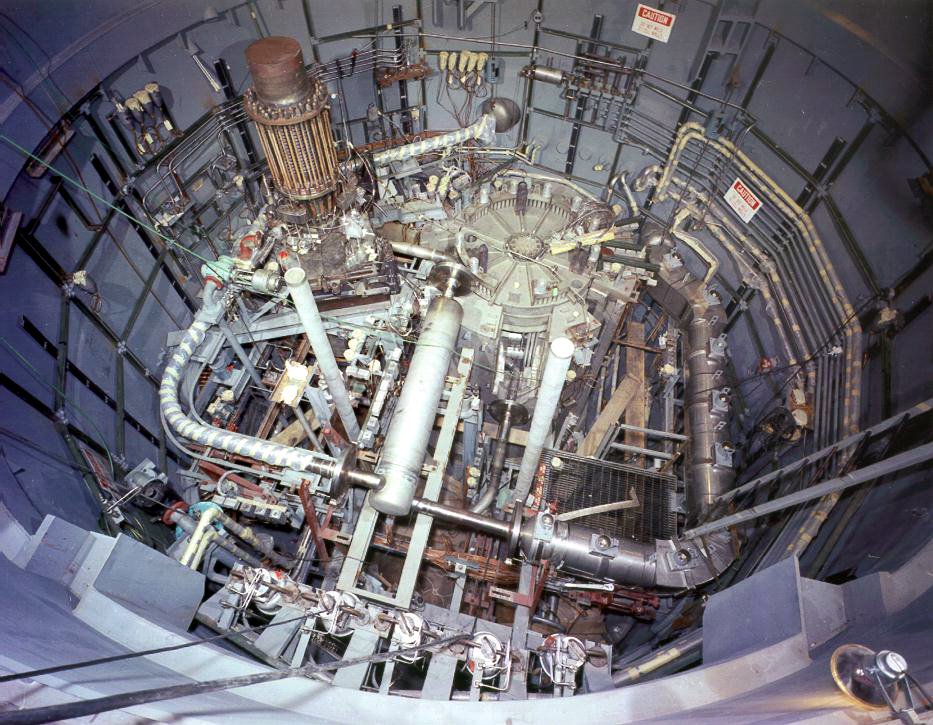
India's Prototype Fast Thorium Breeder Reactor (PFTBR) - the 200-tonne safety vessel being lowered into the reactor vault at the Madras Atomic Power Station (MAPS) located at Kalpakkam about 80 kilometres (50 mi) south of Chennai, India 

INTRODUCTION


“Safe enough for our back yard”

Electricity is a predominant input for the economic development of any country. In spite of the impressive strides in increasing overall installed capacity in the India, the country is still facing power shortages. Options available for commercial electricity generation are hydro, thermal, nuclear and renewable sources. In the energy planning of the country, a judicious mix of hydro, thermal, nuclear and renewable is an important aspect. Diversified energy resource-base is essential to meet electricity requirements and to ensure long-term energy security. With the limited resources of coal and oil available in India and the growing global concerns of greenhouse gases generated by fossil fuel fired stations, in the medium and long-term perspective nuclear power is designated to play a vital role. For a trillion dollar plus economy, like India, increase in the nuclear generation capacity is rational and an inevitable approach as it is environmentally benign, commercially viable and ensures the energy security of the country.

Current Scenario

Post Obama’s visit to India and the clearing of the nuclear deal between India and the US, a great amount of buzz has been generated on this issue. However, the focus has thus far been on using Uranium as a source of nuclear fuel and India getting access to this source of fuel besides the nuclear reactors.


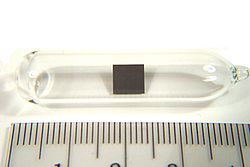
         A Sample of Thorium

A couple of years back when the nuclear deal was first proposed during the UPA government’s stint in power, scientists in India vehemently opposed placing its fast breeder reactor technology under the preview of international nuclear watch dogs and pressed for focusing on Thorium based Fast Breeder Reactor technology for the future.

However, the previous UPA government followed an unwritten policy of severely downsizing both the Fast Breeder Reactor (FBT) as well as the thorium-based technology program, thereby making India dependent on foreign countries for advanced nuclear technology, this is claimed by many key scientists on condition of anonymity. 

Until 2005, Indian was at the forefront of thorium based research. It is also by far the most committed nation as far as the use of thorium fuel is concerned, and no other country has done as much neutron physics work on thorium as India. The country published about twice the number of papers on thorium as its nearest competitors during each of the years from 2002 to 2006.

Bhabha Atomic Research Centre (BARC) had the highest number of publications in the thorium area, across all research institutions in the world during the period 1982-2004. During this same period, India ranks an overall second behind the United States in the research output on Thorium. Analysis shows that majority of the authors involved in thorium research publications appear to be from India.

       Illustration of a Molten salt Reactor

Research and development of thorium-based nuclear reactors, primarily the Liquid fluoride thorium reactor, (LFTR), MSR design, has been or is now being done in the U.S., U.K.,Germany, Brazil, India, China, France, the Czech Republic, Japan, Russia, Canada, Israel and the Netherlands.

According to Siegfried Hecker, a former director (1986–1997) of the Los Alamos National Laboratory in the U.S., "India has the most technically ambitious and innovative nuclear energy program in the world. The extent and functionality of its nuclear experimental facilities is matched only by Russia and is far ahead of the United States".

Back to circa 2015, India is back to counting on foreign suppliers for expensive Uranium fuel and reactors. And this is certainly the wrong direction taken by the policy makers on account of these following vital facts:

Thorium offers a form of energy that is stable, abundant, inexpensive, powerful, safe, continuous, domestically-sourced, non-polluting during both extraction and consumption, transportable, and for which India has at least a thousand-year reserve.

India's Research on Prototype Fast Thorium Breeder Reactor (PFTBR)

At present, there are no internal fertile blankets or fissile breeding zones in power reactors operating in the world. Thorium-based fuels and fuel cycles have been used in the past and are being developed in a few countries but are yet to be commercialized. However, BARC's Prototype Fast Thorium Breeder Reactor (PFTBR) is claimed to be the first design that truly exploits the concept of "breeding" in a reactor that uses thorium. The handful of Fast Breeder Reactors (FBRs) in the world today - including the one India is building in Kalpakkam near Chennai, use plutonium as fuel. These breeders have to wait until enough plutonium to be accumulated through reprocessing of spent fuel discharged by thermal power reactors that run on Uranium. In February 2014, BARC presented its latest design for a "next-generation nuclear reactor" that will burn thorium as its fuel. The target date to commission the system is envisioned for 2016 and it would be a completely automated design which means it would not require any operator to run the reactor for more than two months. The commissioning of PFTBR would make India the most advanced country in thorium research. The concept has won praise from nuclear experts elsewhere. According to former BARC Director P.K. Iyengar, this new design is one way of utilizing thorium and circumventing the delays in building plutonium for India's FBRs. (Text based on reports from Times of India, Circa 2007)

Switching from Uranium to Thorium

India has chalked out a three-stage program to reduce its reliance on imported uranium seeks to make more substantial use of thorium, of which India holds 25% of the world’s total reserves. Although Th-232 is not fissile, it will absorb slow neutrons to produce fissile U-233 when placed in a reactor. (See the sidebar "Now you’re cooking with Thorium" in "Developing the next generation of reactors," POWER, April 2008.) A thorium-powered reactor would be based on a closed fuel cycle.

The first stage consists of setting up pressurized heavy water reactors (PHWRs). Already 17 PHWRs with an installed capacity of 4,000 MW are in operation, and five reactors with an installed capacity of 2,660 MW are under construction. "The choice of PHWRs in the first stage is driven by the fact that in PHWRs, on account of the use of heavy water as moderator and on-power refueling, more neutrons are available to convert U-238 to Pu than in the case of Light Water Reactors (LWRs)," Anil Kakodkar, chair of India’s Atomic Energy Commission, said at a public lecture in Bangalore last year.

The second phase will start with the deployment of domestically designed fast breeder reactors (FBRs) fueled with mixed oxide, and then — when all "necessary technologies" have been developed and demonstrated — metallic fuel – based FBRs, Kakodkar said. These are expected to convert uranium – 238 into plutonium, increasing power generation to 300 GW for about 70 years.

The third stage will involve the gradual transition to thorium-based systems, likely through an advanced heavy water reactor (AHWR) being developed at the Mumbai-based Bhabha Atomic Research Center (BARC). The uranium-233 required for third-stage breeder reactors will be obtained by the irradiation of thorium in PHWRs and FBRs. "Studies indicate that once the FBR capacity reaches about 200 GW, thorium-based fuel can be introduced progressively in the FBRs to initiate the third stage, where U-233 bred in these reactors is to be used in the thorium-based reactors," Kakodkar said.

Construction of a 500-MWe prototype FBR — the first in India — is already in full swing at Kalpakkam, Tamil Nadu (Figure 10). All research and developmental work by the Indira Gandhi Centre for Atomic Research (IGCAR) has been completed on the R35 billion ($680 million) reactor. The project, a joint venture between Bharatiya Nabhikiya Vidyut Nigam, the Nuclear Power Corp. of India, and the IGCAR (which are all federal enterprises) — is expected to begin generating power sometime in 2010.

Types of thorium-based reactors

There are seven types of reactors that can be designed to use thorium as a nuclear fuel. The first five of these have all entered into operational service at some point. The last two are still conceptual, although currently in development by many countries:

  • Heavy water reactors (PHWRs) 
  • High-temperature gas-cooled reactors (HTRs) 
  • Boiling (light) water reactors (BWRs) 
  • Pressurized (Light) water reactors (PWRs) 
  • Fast neutron reactors (FNRs) 
  • Molten salt reactors (MSRs, LFTRs) 
Salient Features of Thorium Fuel and its Reactors

Thorium is Stable (fertile, not fissile)

  • Half life of 1.39x10¹⁰ years 
  • Stable in natural state 
  • Can be handled with care in solid form. Shavings or powder can self-combust in air. 
  • For energy purposes, we will be dealing with thorium as a liquid fluoride. 

Thorium is Powerful


Thorium, by itself, is virtually non-radioactive. It must be bombarded by neutrons to jump-start it. The fissionable result is 233U, which gives off 198 MeV or 82.0 TJ/kg. 
Per nucleus fission, the thorium fuel cycle is virtually as powerful as that of uranium. 

Thorium is Abundant

  • More common in the earth's crust than gold, mercury, tungsten, and tin.
  • More plentiful than uranium by 3.73 times.
  • Can be found in uranium mine tailings and coal power plant ash piles
  • India has 319,000 tons of Thorium
Liquid Fluoride Thorium Reactor (LFTR)

  • Allow for continuous feed for higher fuel utilization 
  • Simplify chemical separation 
  • Provides self-regulation, i.e. higher temperature expands liquid which dilutes concentration, which lowers neutron absorption and fission, which lowers temperature 
  • Make xenon gas removal easy, thereby maintaining high efficiency 
  • Can process today's nuclear waste materials 
Fluorides

  • Chemically stable 
  • Combine with fission products and transuranics 
  • High temperature operation brings high efficiency 
  • No water cooling, control rods, or elaboratecontainment facility needed 
  • Salt plug safety mechanism 
Thorium

  • Very high percentage of a single isotope leads to single isotope fission, thereby a smaller set of fission products/waste. 
  • Thorium's high thermal neutron cross section (~90%) implies fewer higher mass actinides. 
  • Thorium fission products have less neutron absorption leading to significantly greater efficiency. 
  • Chemically separable on the fly from its fissile material (233U). 
  • Thorium fluoride has low water solubility. 
Current Reactor Safety

  • No spent fuel rods. instead molten fuel continuously consumed 
  • No melt down Instead passive cooling 
  • No water Instead molten salt for heat transfer and gas turbines for electricity generation 
  • No high pressure. Instead the reactor runs at high temperature, making the turbines more efficient 
  • No containment facility 
  • In the unlikely event of a fuel spill, the fuel turns solid. 
  • Low water soluble compounds, i.e. no ground water contamination if promptly addressed 
  • Overheated salt self-corrects itself to lower temperature 
  • Freeze plug for automatic and/or quick shutdown 
  • No water for steam explosion 
  • No O2 or other gases in the system to assist explosions 
  • Low pressure environment can't explode & spread fuel 
  • Must add fuel to keep reactor running 
  • No spent fuel stockpile to maintain/protect 
  • Radioactivity confined to reactor. chemical separators, 1st heat exchanger, & drain tank 
Can Thorium be used directly for a bomb?

Thorium is naturally stable. It is no good for a bomb in its elemental state. It is also stable in fluorides and other compounds.

Could a LFTR reactor be used as a bomb?

If you could somehow overload the reactor, the temperature would rise, the freeze plug would melt, and the fluoride would flow to an external reservoir where it would solidify because the geometry would not support fission. You would need a LFTR like environment to unfreeze it and re-stimulate fission to an extreme

Can one take radioactive material out of a LFTR and use it for a dirty bomb?

Yes, but these materials are extremely hot and giving off gamma rays that, nearby, could disable all electronics and kill a person within 72 hours. To then use this material, you would have to build a special reactor/bomb, a task about half the size of the Manhatten Project.

Will LFTR sites need security?

Yes. Even if only for the waste that must be controlled.

Waste Management comparison – Uranium Vs Thorium

  • Mine waste generation - Thorium solid waste advantage for this set of steps: 3667 to 1. 
  • Operation waste generation - Thorium solid waste advantage: 363 to 1
Reactor Waste Products per GigaWyr

Uranium Fuel Cycle

  • 250 tons inc. 1.75 t 235U 
  • 215 tons of depleted 238U inc. 0.6t 235U waste + 35t enrich U inc. 1.15t 235U 
  • Yields 33.4t 238U & 0.3t 235U & 1t fission products & 0.3t plutonium 
  • Products include Pu-238, 239 (50%), 240, 241, 242 and 0.1% Americium, neptunium, curium 

Thorium Fuel Cycle

  • 1 ton Thorium at start 
  • 83% of fission products are stable in 10 years 
  • 17% of fission products are stored for 300-350 years 
  • Zero thorium at end 
  • 0.0001 ton of plutonium 
  • Thorium products need sequestering on the order of 350 years versus 350,000 years for the plutonium products. 
LFTR Design Advantages

Built-in passive safety, proven, scaleable, site agile, manufacturable, carbonless, domestically sourced, potential export product, small footprint, transportable, manageable waste, abundant electrical power source, enrichment free, available fuel already, no mineral exploration needed, 1000+ year fuel reserve, can consume existing nuclear waste stockpiles, proliferation resistant, resilient to natural diasters, performance tunable/load following, on/off capable, low-cost fuel, waterless, higher electricity conversion efficiency, centralized quality control. 

Resilient to natural disasters could use further explanation. LFTRs are scalable in size. For general utility, the optimal size maybe modules about the size of cargo containers. These are relatively small and coud be built to shake as a unit during an earthquake. The relatively small size reduces the torque along any given axis. 
If the LFTR ends up under water, the control electronics will probably burn out. But if all fails, the fuel will solidify as it cools. 

LFTR development and production

  • Cost of 400MWe LFTR equal to Airbus A380 passenger jet 
  • LFTR modules can be built in factories 
  • Both have 400MW gas turbines 
  • Both are low pressure vessels ~10psi 
  • Production quantities may be similar. They do one a week 
  • Purchase price ~$320 million 

As you can see from the above statistics, Thorium is the Internet of Energy and can fulfill most of our energy requirement of the future.


23 January 2015

Selecting the Right Mix of Combat Aircraft


We have been hearing for a long time about various different combat aircrafts and also more recently about the LCA Tejas since its second initial operational clearance. Considering the wealth of information available on all of these combat aircrafts, it is but natural to make a comparison of all of these combat aircrafts.

The combat aircrafts that are being considered for this comparison are JAS 39 Gripen, F-15 Eagle, F-16, F/A-18E Super Hornet, F-35 Stealth, Euro Fighter, Dassault Rafale, Mig-29, Su-30, Su-35, T-50 FGFA, J-10 and the LCA.

The aircrafts are categorized based on their maximum take-off weight as Light-Combat, Top Line Combat, or Medium Role Combat.


The pricing and configuration is taken at the maximum potential of these aircraft

Let us first look at the Light Combat variants. The first ranking goes to the JAS39 Gripen aircraft from Sweden as it has the same or less maximum take-off weight as the other two contenders, the LCA and the Chinese J10. But it has a better range of operations and combat radius and offers a more potent configuration of weapon systems. 

For example the Gripen can easily shoot down the LCA and the J10 from 180 miles and deliver a load of missiles more than 500 miles away. Considering it has a combat radius of 432 miles, it can easily do its job and get away. Though the price of the Gripen is twice that of the LCA or the J10, a small squadron of these high tech aircraft with less number of pilots can take care twice or thrice the number of LCA / J-10 squadrons.


The Indian Air Force is right in demanding a more potent LCA than its present form to take on the Light Combat role. If the LCA MKII or MKIII can have a more powerful and fuel efficient engine, it can have a better range and carry more long range weapons like the Brahmos ASM and longer range AAMs at a reasonable price.

Let us now consider the Top Line combat aircrafts that also includes the still under development stealth aircraft by Russia and India as also the F-35 Stealth Fighter that the US and its allies are equipping themselves with.

The F-35 is clearly the winner here primarily because of its advanced stealth capabilities and design as also it offers the maximum weapon load of 8100 KGS giving it the flexibility of equipping itself with a range of long range AAMs and ASMs and delivering it with a sufficiently comfortable combat range thus ensuring survivability. This combat aircraft can only be challenged by the joint Russian/Indian T-50 equipped with longer range missiles and a longer combat radius. Which means the T-50 may well be able to detect the F-35 at closer range and engage it and then be able to fire missiles from a longer distance and turn around and get away. The F-35 on the other hand with its more stealthy features may get behind the T-50 and fire the first shot.

The second rung of Top Line combat aircraft constitutes the Su-30MKI, Su-35 and the F15 Eagle.


The Su-30MKI is far superior to the Su-35 in weapon and range capabilities and hence can defeat the Su-35 that the Chinese have purchased from the Russians on this count. The Su-30MKI has better long range weapons and once equipped with the supersonic Brahmos will make it a fearful weapon platform. The Su-35 on the other hand is faster than the Su-30 and hence could take down the Su-30 in close combat. The Russian Su-35 has stealth coatings that also make it difficult to be detected by radars. 

The F-15 Eagle is still the King of the skies and is faster than the Su-30MKI or the Su-35 as well has a higher operating ceiling which means it can go higher than both combat aircraft and shoot them down using its look down radar and long range missiles. However, the Su-30MKI may be able to detect the F-15 at longer ranges and fire the first shot at it. When it comes to close range combat, both aircrafts are equally matched though the Su-30MKI has an edge though everything depends on the pilots. The F-15 has more rounds of ammunition than the Su-30MKI or the Su-35.

The F/A-18 Super Hornet is the odd man out here. With a shorter combat radius and slower speeds, this combat aircraft will need to go with a fully loaded weapons suite to neutralize the Su-30MKI or the Su-35. Both the adversaries can shoot down the F/A-18 using the look down mode as they have a higher operating ceiling and the Su-30MKI may carry longer range missiles though US combat aircrafts are known to have a higher kill ratio versus Russian fighters.

The last category of combat aircraft here is the Medium Role Combat aircraft that the Indian Air force recently went for in selecting the French made Rafale combat aircraft. 

From the above table it is quite clear that this decision was a wise decision as the Rafale has the best combat range and weapon configuration. However, it remains to be seen what the IAF versions of Rafale are equipped with. Certainly they will be French AAM or American AAM missies and not longer range Russian or Indian missiles.

It is also doubt if the Rafale will be able to integrate the supersonic Brahmos cruise missile. So though selecting the Rafale is a wise decision in terms of quality it may be the most expensive choice here. The Rafale has more weapon payload capacity than even the Top-Line combat aircrafts and hence can carry more bombs and missiles than the Su-30MKI theoretically.

However, it is slower than then all the other aircrafts in this category, namely the F-16, EuroFighter and the Mig-29. The F-16 though offers a good match to the Rafale in terms of missiles and bombs it can carry; it may be shot down by the Rafale using its long combat radius and if equipped with long range AAMs. The EuroFighter on the other hand has the highest service ceiling as it can hover at 70,000 feet and use its look down radar to shoot down the other contenders which can reach not more than 60,000 feet. The EuroFighter comes with the same potent long range American missiles as the F-16 and therefore is a better challenger to the American fighter than the Rafale.

The Rafale on the other hand can deliver the maximum punch in the ground attack role and may need the support of Su-30MKI to counter the F-16s or the EuroFighters.

The Mig-29 is in the lower rung of this combat category mainly due to the lower configuration of its weapon loads. In close combat, it can still out maneuver the F-16 or even the Rafale so long as it is not shot down from longer ranges. Here also, the F-16 has more ammo than all the other competitors and close combat could be really close and depend greatly on the caliber of the pilots.

The final analysis is that for any Air Force when taking a decision on selecting the right combat aircraft is certainly as challenging as using them in real combat. The ideal combination would be as follows:

Two to Four Squadrons of F-35 or T-50 FGFA each with 20 combat aircrafts and 5 Training aircrafts. That is a total of 45 F-35 or 90 T-50 FGFA Stealth aircrafts to make the first strike and take out the enemy’s air defenses will cost $7Billion(F-35).

This will be followed by 5 squadrons of Rafale each equipped with 20 combat aircrafts and 10 additional Training versions totaling 110 Rafale combat aircrafts to vanquish the enemy by destroying airfields and defense infrastructure by delivering 10 tons of destruction by each aircraft costing $14 billion.

The Rafale will be supported by 10 squadrons of Su-30MKIs with a total of 250 combat aircrafts costing another $14 billion.

Finally once the Air Force has achieved air superiority, it can deploy 10 squadrons of LCA-Tejas MKII or MKIII totaling 250 Tejas of different versions costing in total $8 billion.

As the Indian Air force has already purchased the Su-30MKI combat aircrafts, it needs to for 2-4 squadrons (F-35/T-50) of stealth fighters, 5 squadrons of Rafale and 10 squadrons of LCA-Tejas costing not more than $30 billion over a 10-15 year period.

On the other hand, we are going ahead inking a deal for $20 billion or even more as also $25 billion T-50 deal and add to the cost of acquiring LCA-Tejas fighters taking the total spend to over $50 billion. That is an additional $20 billion over the actual requirement as shown earlier.

Instead of going for the $25 billion T-50 Russian project that may never satisfy our needs, it would be prudent to talk to the Americans and get 2 squadrons of the far more advanced F-35 which are available for purchase. Using these advanced aircrafts can help us develop a stealthy model of the LCA which anyways has American Engines and technology. This will cost less than the ever delayed T-50 project over the long term.

Once the stealthy version of the LCA is developed, we may be able to advance considerably as in the case of the missiles and space launch vehicles in developer even top line combat aircrafts in the future. Especially considering we are allowing 49% of FDI in defense and running the Make in India campaign so effectively. 

This will ensure we are not at the whims and fancies of external suppliers such as the US, France and Russia for our defense.